risk-bearing Organizations, VBC, Medicare Advantage

Turn every care transition into an opportunity to protect outcomes and shared savings.

Cascala helps ACOs and other risk-bearing organizations act on care transitions while follow-up opportunities are still open. ADT-informed workflows retrieve available records, deliver PCP-ready clinical summaries, surface source-cited documentation opportunities, and provide visibility across the attributed population.
Post-discharge opportunity capture
HCC recapture
Network-wide visibility
Built for CMS V28
How Cascala helps

Population-level visibility, with a documented record for every transition.

Cascala reaches the care team while the TCM window is open, surfaces suspected HCCs with source-cited evidence, and shows the whole attributed population — so savings get protected before they leak.
  1. Capture the TCM window

    ADT-informed alerts and consolidated records reach the care team while the window is still open — so eligible follow-up actually gets done, and billed.

  2. Recapture HCCs at the richest moment

    Suspected conditions and care gaps surface before the encounter closes, with source-cited evidence behind every extraction — supporting clean, defensible documentation under CMS V28.

  3. See the whole attributed population

    Network-wide visibility across attributed lives and your entire post-acute network — readmission risk, utilization, and follow-up status in one view.

  4. A record built for shared savings & stars

    A documented, auditable record across every setting — the evidence base for shared-savings reconciliation and star ratings.

Proof, not promises

Outcomes from real deployments

71%
faster ADT-to-record delivery at Palm Beach ACO — the market’s AI-native ACO proof point.
87.5%
AI recommendation accuracy.
<10 min
average time to a referral recommendation.

Population level visibility.

Replaces a black-box 30 days after discharge  —  infrequent handoffs, PCPs who miss the TCM window, and savings that leak into readmissions and ED use.
Readmission rate
12%
-2.1% vs. prior year
Total patients
2,688
+6.6% vs. prior year
Total admissions
2,748
+6.0% vs. prior year
High risk patients
444
-21% vs. prior year
Length of stay
5.9 days
-9.3% vs. prior year
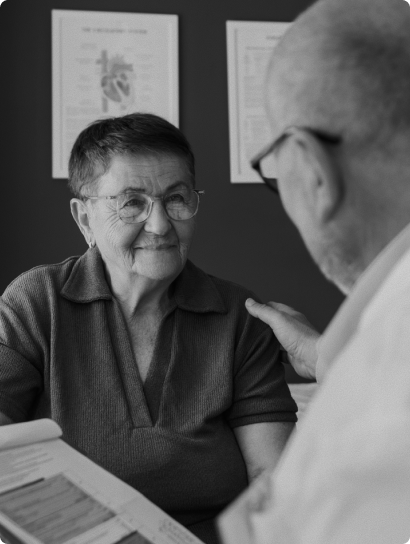
Clinician talking with an older patient

Care-gap report in

Now: The health plan sends the care-gap report; outreach schedules; the patient is scheduled in the EHR 48+ hours prior.

  • Cascala starts the moment the visit is scheduled.

Chart prep

  • Chart Prep + Cross-Facility Patient 360°: retrieves records and surfaces the suspected HCCs and HEDIS gap evidence before the encounter — each with Verified & Visible Sources — and loads the problem list and evidence into the EHR.

The visit

  • CASS: the provider reviews the problem list and evidence before the visit, closes the gaps, and publishes the note — capturing conditions at the richest moment, under CMS V28.

Final review & claim

  • Comparison Report: flags discrepancies between the note and the evidence; the coder resolves them; the claim goes out clean — backed by a documented, auditable record for shared-savings reconciliation and star ratings.

The workflow

From care-gap report to a clean, defensible claim.

Cascala prepares the evidence, supports the visit, and checks the note before submission — so gaps close, HCCs are captured at the richest moment, and the documentation stands up to audit.

  1. Care-gap report in

  2. Chart prep

  3. The visit

  4. Final review & claim

Records prepared retrieved and ready for attributed patients. Evidence surfaced HCC and HEDIS gap evidence, cited, before the visit. Quality assured a documented, audit-defensible record behind every claim.

Cascala makes the TCM process easier as we do not have to source our discharge records.
Medical Director, ACO-Affiliated Provider Group

Frequently Asked Questions

How can ACOs improve post-acute care coordination?

ACOs can improve post-acute coordination by turning ADT signals and discharge records into timely, usable handoffs; tracking follow-up; and giving care teams visibility into what happened across settings. Cascala supports these workflows by bringing transition information and source documentation together.

How does Cascala help ACOs act on ADT alerts?

Cascala uses ADT-informed workflows to confirm transitions, retrieve available records, and deliver clinical context to the teams responsible for follow-up. This helps move an alert from a notification into an actionable handoff.

Can Cascala help reduce avoidable readmissions?

Cascala can help teams identify relevant clinical risks and follow-up needs earlier in the transition. Technology alone does not prevent a readmission, but clearer handoffs and more timely follow-up can support an organization’s readmission-reduction efforts.

Demo item 1 — the question field renders here

The answer rich-text field renders here. This stand-in exists only so the local file has something to open and close.

Demo item 2 — a longer question, to show how the text wraps next to the icon on narrow screens

Rich text can hold several paragraphs.

A second paragraph, then a list and a link, to preview how answer formatting is styled:

  • First list item
  • Second list item

A link inside an answer

Demo item 3

Stand-in answer.

Demo item 4

Stand-in answer.

Operate the buildings?

Protect savings at every transition.

Twenty minutes is all it takes to see what better intelligence does for better outcomes.
© 2026 Cascala Health, Inc. All rights reserved.

Cookie Notice

We use cookies to ensure that we give you the best experience on our website. You can manage your preferences at any time.